Summary: As infrastructure projects face increasing pressure to reduce costs, minimise disruption, and improve long-term performance, the debate around precast vs cast in situ culverts has become more relevant than ever.
Across South Africa and beyond, engineers and contractors are increasingly turning to precast concrete culverts because they offer faster installation, superior quality control, and reduced lifecycle costs.
Delays caused by on-site construction, weather conditions, and extended curing periods can significantly impact project budgets and timelines.
Choosing precast culvert solutions can accelerate project completion while delivering reliable, long-lasting infrastructure designed to perform for decades.
What Is the Difference Between Precast and Cast In Situ Culverts?
Culverts play a critical role in modern infrastructure, managing stormwater, supporting roads, and protecting communities from flooding. The primary difference lies in how the structures are manufactured and installed.
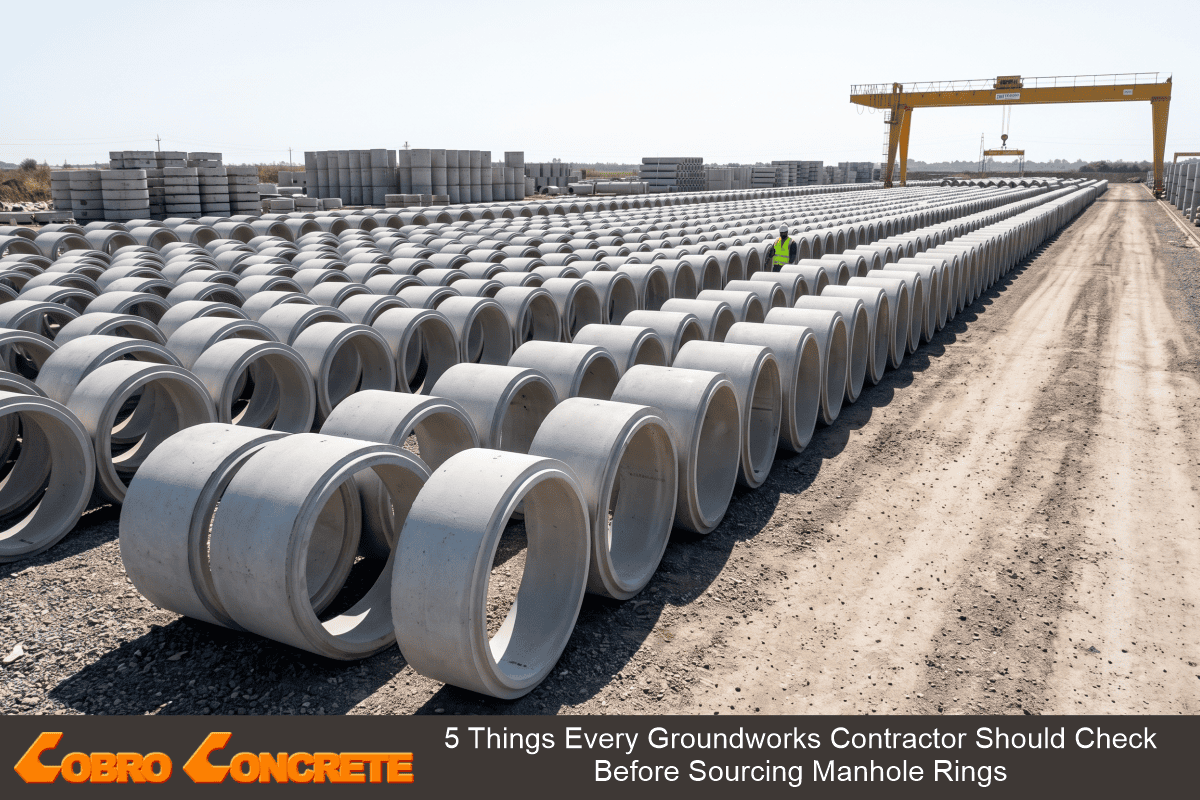
Cast in situ culverts are constructed directly on-site using formwork, reinforcement, concrete pouring, and curing processes. Precast culverts, on the other hand, are manufactured in a controlled factory environment and transported to site ready for installation.
Answer: Precast culverts are manufactured off-site under controlled conditions and installed rapidly on-site, while cast in situ culverts are built entirely on-site, requiring more labour, curing time, and weather-dependent construction processes.
While both methods can provide effective drainage solutions, modern infrastructure projects increasingly favour precast systems because they reduce construction risk and improve project efficiency.
At Cobro Concrete, decades of experience supplying SABS-approved precast culverts have demonstrated how factory-manufactured solutions can streamline infrastructure delivery while maintaining exceptional quality standards.
The Three Pillars Driving the Shift to Precast Culverts
The growing preference for precast infrastructure solutions can be traced back to three major advantages that directly impact project success.
1. Faster Installation and Reduced Project Delays
One of the most significant advantages of precast culverts is installation speed.
Because units arrive on-site already manufactured and cured, contractors can eliminate lengthy formwork, concrete pouring, and curing processes. This significantly reduces construction timelines and allows roads and infrastructure to return to service sooner.
For municipalities and developers, shorter installation periods also mean reduced traffic disruptions and lower labour costs.
2. Superior Quality Control and Structural Consistency
Precast culverts are produced in controlled factory environments where manufacturing conditions can be carefully monitored.
This ensures consistent dimensions, reliable strength, and compliance with industry standards. Unlike cast in situ construction, which can be affected by weather conditions and on-site variables, precast production offers greater quality assurance throughout the manufacturing process.
The result is infrastructure that delivers predictable performance and long-term reliability.
3. Lower Lifecycle Costs and Long-Term Performance
Infrastructure decisions shouldn’t be based solely on upfront costs.
Modern engineers increasingly evaluate assets based on their total lifecycle performance. Precast culverts are known for their durability, reduced maintenance requirements, and resistance to environmental stress. Their long service life often results in lower ownership costs over time.
As climate resilience becomes more important, durable precast systems are helping infrastructure owners reduce future repair and replacement expenses.
Key Precast vs Cast In Situ Culvert Considerations
When evaluating culvert solutions, what factors matter most?
| Culvert Factor | Operational / Practical Impact | Core Benefit |
|---|---|---|
| Installation Speed | Precast units arrive ready for placement. | Faster project completion. |
| Quality Control | Factory-controlled manufacturing environment. | Consistent structural performance. |
| Weather Dependence | Minimal impact during installation | Reduced construction delays. |
| Long Term Maintenance | Durable concrete construction with fewer defects. | Lower lifecycle costs. |
| Site Labour Requirements | Reduced on-site construction activities | Improved efficiency and safety. |
Frequently Asked Questions
Are precast culverts stronger than cast in situ culverts?
Both systems can achieve the required structural performance when properly designed. However, precast culverts benefit from factory-controlled manufacturing and curing processes that help ensure consistent quality and strength across every unit.
Why do infrastructure projects prefer precast culverts?
Many projects choose precast culverts because they significantly reduce installation time, minimise site disruption, and provide reliable long-term performance. These advantages help keep projects on schedule and within budget.
When might cast in situ culverts still be used?
Cast in situ culverts may be preferred when a project requires highly customised geometry, unusual site conditions, or where transporting large precast units is impractical.
How do precast culverts support climate-resilient infrastructure?
Modern precast culverts can be engineered to handle increased stormwater volumes, improve hydraulic performance, and provide long-term durability in changing environmental conditions.
Partner with Cobro Concrete for Advanced Culvert Solutions
Cobro Concrete has been supplying SABS-approved precast concrete products since 1984, supporting infrastructure projects throughout KwaZulu-Natal and neighbouring regions. Our range of precast culverts, pipes, manholes, and engineered concrete products is designed to deliver exceptional performance, durability, and value. Whether you’re developing municipal infrastructure, road networks, industrial facilities, or stormwater management systems, our precast solutions help reduce project risk while improving construction efficiency.
Explore Cobro’s advanced precast culvert solutions today and discover why modern infrastructure is increasingly moving beyond cast in situ construction toward faster, smarter, and more resilient precast alternatives.
Read Next: Climate-Ready Culverts: 2026’s Infrastructure Standard
Discover More: Project Kickoff: Vetting Your Pre-cast Supplier for Quality